
ChatGPT Referrals to Retailers and Apps Jump 28% Year Over Year, Report Finds
3 Mins Read
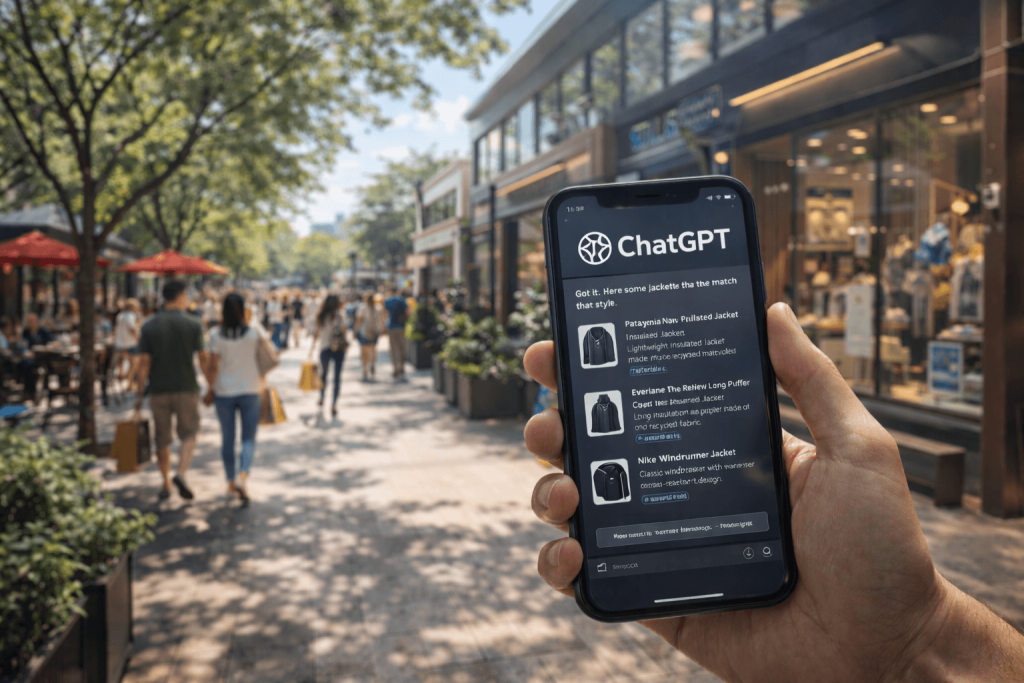
ChatGPT is no longer just answering homework questions or drafting emails. It is increasingly sending users to retailers and mobile apps.
According to a report cited by TechCrunch, referrals from ChatGPT to retail websites and apps increased 28% year over year, signaling that generative AI is emerging as a meaningful discovery and traffic channel for commerce.
The data suggests that conversational AI is starting to influence how consumers find products — and where they shop.
What the Report Found
The analysis tracked outbound referral traffic from ChatGPT to retail destinations.
Key finding:
- Retail and app referrals from ChatGPT rose 28% compared to the previous year.
This growth indicates that users are:
- Asking for product recommendations
- Requesting price comparisons
- Searching for specific brands or items
- Seeking shopping advice within chat conversations
Instead of typing queries into traditional search engines, some users are now beginning their shopping journeys inside AI chat tools.
Why This Matters for Retailers
For years, online shopping traffic has been dominated by:
- Search engines
- Social media
- Paid ads
- Email marketing
If AI chat platforms continue gaining traction as referral sources, retailers may need to rethink digital strategy.
Key implications include:
- Optimizing product data for AI-driven discovery
- Ensuring accurate brand representation in AI responses
- Monitoring referral analytics from conversational platforms
Unlike search results pages filled with ads and sponsored placements, AI responses are typically curated summaries. That could change how products gain visibility.
AI as a Discovery Layer
ChatGPT and similar tools function differently from traditional search.
Instead of presenting lists of links, AI:
- Synthesizes product information
- Highlights features
- Suggests comparisons
- Provides direct links
This creates a more guided shopping experience.
For consumers, it may feel more personalized. For retailers, it introduces a new algorithmic gatekeeper.
Monetization Questions Remain
As AI-driven referrals grow, key questions emerge:
- Will AI platforms introduce sponsored placements?
- How will affiliate revenue be structured?
- Will retailers pay for priority visibility?
- How transparent will AI product recommendations be?
Referral growth alone does not guarantee revenue. The commercial model around AI-driven commerce is still evolving.
The Broader Trend: AI and E-Commerce Converge
The 28% increase aligns with a larger shift in digital behavior.
Consumers are using AI tools to:
- Research products
- Draft shopping lists
- Compare features
- Discover niche brands
At the same time, retailers are experimenting with:
- AI-powered chat assistants
- Automated personalization
- Dynamic pricing tools
- Conversational checkout flows
AI is becoming both the shopping assistant and, potentially, the storefront.
What’s Next?
If referral growth continues, retailers may:
- Track AI-originated traffic separately
- Invest in structured product data
- Develop direct integrations with AI platforms
- Adapt SEO strategies for conversational discovery
AI platforms, meanwhile, may expand deeper into commerce features.
The long-term question is whether AI remains a referral channel — or becomes a transaction layer itself.
Conclusion: A New Traffic Source Emerges
A 28% year-over-year rise in ChatGPT referrals suggests that AI-powered chat is moving beyond experimentation and into measurable commerce impact.
Search and social media are not disappearing. But AI is carving out a new role in the digital retail ecosystem.
As conversational interfaces mature, the boundary between advice and transaction may continue to blur.
Key Takeaways
- ChatGPT referrals to retailers and apps increased 28% year over year.
- Consumers are increasingly using AI for product discovery and comparison.
- Retailers may need to adapt to AI-driven traffic patterns.
- Monetization models around AI commerce are still developing.
- Conversational AI is emerging as a new digital shopping channel.