
EVs Still Produce Air Pollution, But Less Than Gas Cars, Study Finds
3 Mins Read
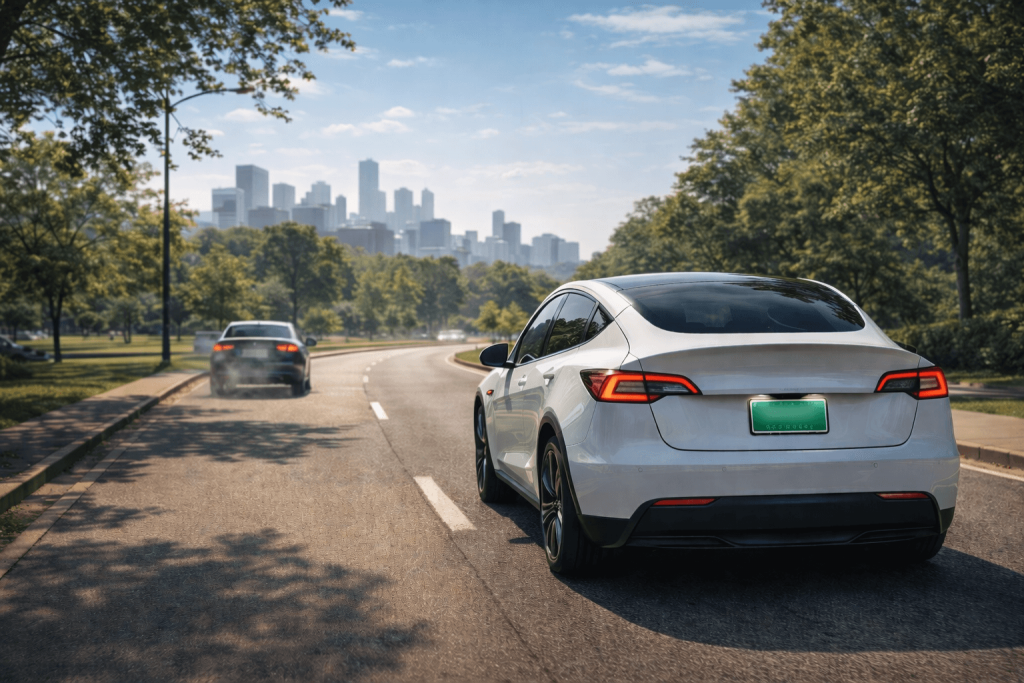
Electric vehicles (EVs) are widely promoted as a cleaner alternative to gasoline-powered cars. But a new study highlighted by The Verge makes an important clarification: EVs are not pollution-free.
While EVs eliminate tailpipe emissions, they still generate air pollution through tire wear, brake dust, and electricity generation. Even so, the study concludes that EVs produce significantly less harmful pollution overall compared to gas vehicles.
The findings add nuance to an increasingly politicized conversation around transportation and climate policy.
What the Study Found
The research examined different sources of air pollution linked to vehicles, including:
- Exhaust emissions
- Brake dust
- Tire wear particles
- Electricity production emissions
The key takeaway: EVs reduce overall air pollution compared to internal combustion engine (ICE) vehicles, even after accounting for non-exhaust emissions.
EVs produce zero tailpipe emissions, which are a major source of:
- Nitrogen oxides (NOx)
- Carbon monoxide
- Fine particulate matter
These pollutants are strongly associated with respiratory and cardiovascular disease.
What About Tire and Brake Pollution?
Critics often argue that EVs are heavier than gas cars due to their batteries, which could increase:
- Tire wear
- Road dust
- Particulate pollution
The study acknowledges that tire particles contribute to air pollution across all vehicle types.
However:
- EVs use regenerative braking, which reduces brake wear
- Overall emissions remain lower when tailpipe pollution is eliminated
- Improvements in tire technology may further reduce particulate output
In short, non-exhaust emissions exist, but they do not outweigh the benefits of removing tailpipe exhaust.
Electricity Generation Matters
EV emissions also depend on how electricity is generated.
In regions relying heavily on coal-fired power plants, upstream emissions may be higher than in areas powered by renewable energy.
However, the study indicates that even in fossil-fuel-heavy grids, EVs generally outperform gasoline vehicles in total pollution output over time.
As grids transition toward cleaner energy sources, the environmental advantage of EVs increases.
Why This Debate Matters
Transportation remains one of the largest contributors to air pollution and greenhouse gas emissions globally.
Policymakers and regulators rely on scientific assessments like this study to shape:
- EV incentives
- Emission standards
- Urban air quality regulations
The findings challenge simplified narratives — both the claim that EVs are pollution-free and the argument that they are equally harmful as gas vehicles.
The Bigger Trend: Measuring Full Lifecycle Impact
Environmental evaluation is increasingly shifting toward lifecycle analysis.
Instead of focusing only on tailpipes, researchers now consider:
- Manufacturing emissions
- Battery production
- Electricity generation
- End-of-life recycling
This more comprehensive approach provides a clearer comparison between EVs and ICE vehicles.
The overall conclusion from the latest research supports EV adoption as a cleaner alternative, even with caveats.
What’s Next?
Future improvements may further reduce EV-related pollution through:
- Lighter battery materials
- Improved tire compounds
- Cleaner energy grids
- Enhanced recycling systems
Regulators may also consider new standards for non-exhaust emissions across all vehicle types.
Conclusion: Not Perfect, But Cleaner
The study reinforces a central point: EVs are not completely pollution-free, but they are cleaner than gasoline-powered vehicles overall.
As energy systems evolve and vehicle technologies improve, the gap is likely to widen.
The conversation around electric vehicles may benefit from nuance — acknowledging limitations while recognizing measurable gains in air quality.
Key Takeaways
- EVs still generate pollution through tires, brakes, and electricity generation.
- They eliminate tailpipe emissions, a major source of harmful air pollutants.
- Overall air pollution from EVs is lower than from gasoline vehicles.
- Grid energy mix influences total emissions impact.
- Lifecycle analysis offers a more accurate comparison between vehicle types.